%20(19).png)

.svg)
State of Survival v1.25.400: Alliance Prep Strategy for Abyssal Skirmish
.png)
.png)
.png)
.png)
.png)
.png)
.png)
.png)
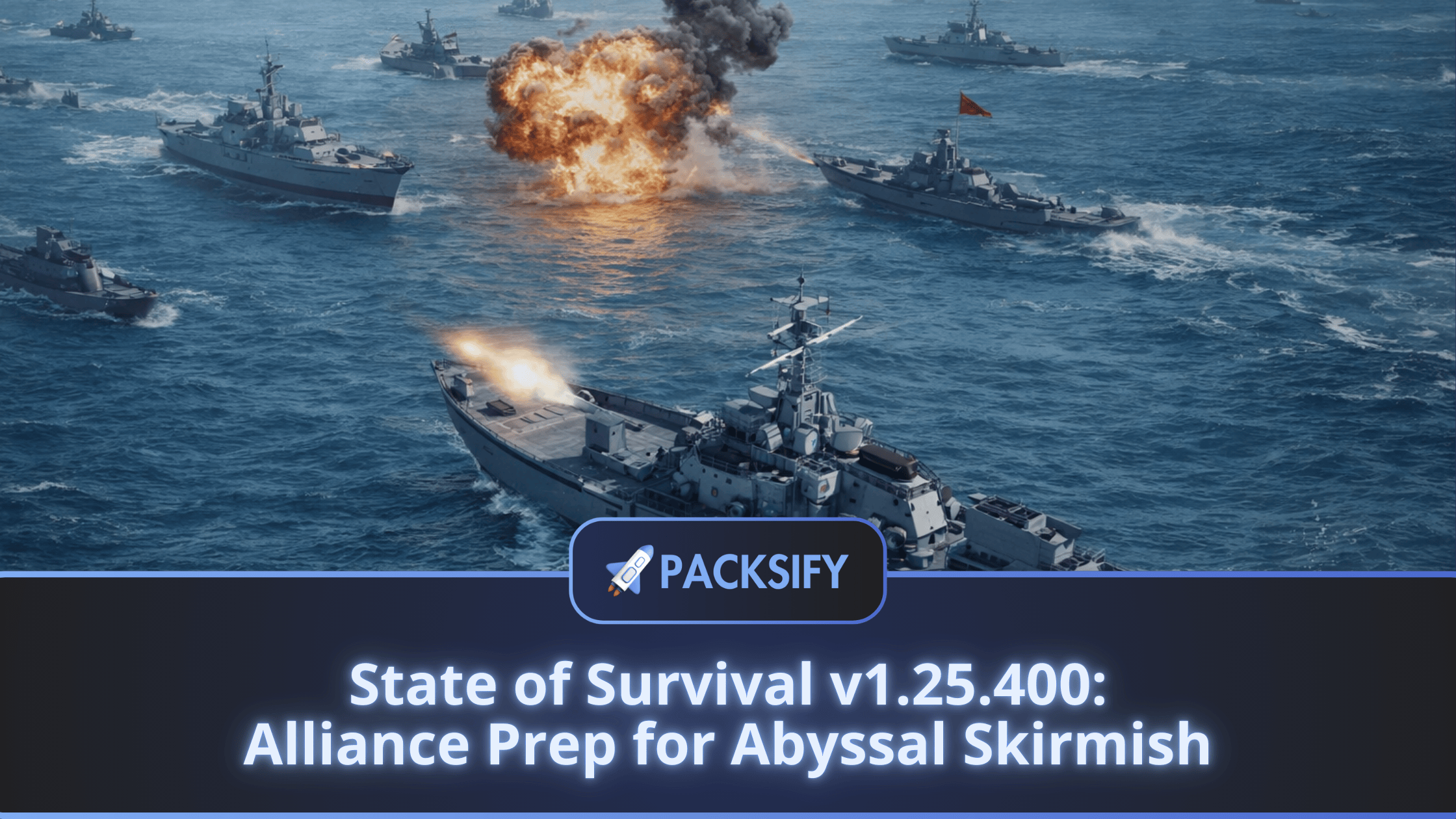
State of Survival v1.25.400 doesn’t raise power ceilings, but it directly affects how alliances prepare for and execute Abyssal Skirmish event. For leaders who care about coordination efficiency and spend discipline, that makes it more relevant than most stat-heavy patches.
The update tightens visibility around timing, warship activity, and alliance decisions. That sounds minor until you consider how most Abyssal losses actually happen: rallies arrive early or late, members prep for different windows, and warship investment decisions go unquestioned until after the damage is done.
This article focuses on what actually changed in v1.25.400 and how alliance leaders should adjust Abyssal Skirmish prep to reduce wasted spend and execution errors. Everything here is drawn from the official patch notes and observed gameplay impact, not theorycrafting.
Source: official State of Survival patch notes, v1.25.400
State of Survival Abyssal Skirmish Execution After v1.25.400
Timing is now visible, and that cuts both ways…
The most important change in State of Survival v1.25.400 for Abyssal Skirmish is improved timing visibility. Alliance Warship information now appears on the mini-map, battlefield notifications are clearer, and players can see a countdown to the next damage instance.
For alliance leaders, this shifts execution from assumption to confirmation.
Instead of relying entirely on external reminders or chat coordination, your members can now see when damage windows are actually approaching. Done right, this reduces premature marches, unnecessary speedups, and idle troop time.
But this visibility also removes excuses. When timing is clearly displayed, late joins and mistimed rallies are no longer system problems—they’re discipline problems.
Leaders should expect a short adjustment period and proactively brief officers on how to use these indicators. Otherwise, the added information just becomes clutter rather than leverage.
The upside is real: tighter rallies, fewer wasted heals, and more consistent pressure during contested Abyssal windows.
Several of these execution issues stem directly from warship mini-map formation changes, which require leaders to rethink rally ownership and spacing under higher visibility.
Alliance prep, Warship logs, and the real cost of poor investment decisions…
Two quieter v1.25.400 changes reshape alliance prep more than most players realize.
First, once R4 or above registers Abyssal Skirmish time slots, those selections are now visible to the entire alliance. This forces alignment. There’s no ambiguity about when the alliance is committing, which helps serious players plan properly but it also means leadership needs to be confident before locking anything in.
Second, alliance logs now record Alliance Warship upgrades. This is a meaningful shift toward accountability. Warship upgrades are expensive, and before this patch, it was easy for inefficient or redundant upgrades to slip through unnoticed. Now leaders can review what was upgraded and decide whether those investments actually supported Abyssal performance.
This introduces a trade-off leaders can’t ignore: centralized warship planning versus individual initiative. Central control usually produces better ROI, but it requires more communication and trust.
V1.25.400 doesn’t force one approach, it simply removes the ability to stay blind.
Additional fixes like improved UI scaling and automatic faction chat opening reduce execution friction, especially in high-stress Abyssal moments. These aren’t flashy changes, but they prevent the small errors that compound into lost fights.
Closing perspective
State of Survival v1.25.400 doesn’t make Abyssal Skirmish easier. It makes it less forgiving.
Alliances that adapt their prep (by training officers on new timing cues, reviewing warship logs deliberately, and locking schedules with confidence), will convert the patch into consistency.
Those who treat it as cosmetic will see no benefit, and possibly more internal friction.
For alliance leaders, this patch is about control: control of time, control of spend, and control of execution. Used correctly, it doesn’t win the fight for you, but it stops you from losing it unnecessarily.
Where funding discipline quietly supports execution…
At this level of play, the question is rarely whether leaders are willing to spend. The real variable is whether that spending stays predictable during heavy cycles like Abyssal Skirmish.
Troop stacking plans, mercenary usage, and bonus timing all assume something most leaders don’t consciously track until it fails: that recovery and reinforcement are available exactly when needed.
When funding becomes noisy (failed payments, delayed top-ups, unexpected limits, or last-minute transaction friction), execution breaks at the worst possible moment. Not because the plan was wrong, but because the system supporting it wobbled.
This is where a controlled funding layer starts to matter.
High-performing alliance leaders increasingly separate decision-making from transaction handling. Spending is still aggressive, but it’s routed through systems that keep it planned, transparent, and stable under pressure.
Packsify sits in that layer. Leaders use it so funding remains predictable during Abyssal cycles, allowing officers and hitters to focus on timing, stacking, and outcomes — not payment retries or rushed fixes.
When the funding side stays quiet and reliable, execution systems actually get to do their job. And in events decided by narrow margins, that silence is often the difference.
Same spend, more progression.
Packsify is built for players who outgrow the basics.