
%20(19).png)

.svg)
State of Survival Events Guide: Which Events Are Worth Your Diamonds
.png)
.png)
.png)
.png)
.png)
.png)
.png)
.png)
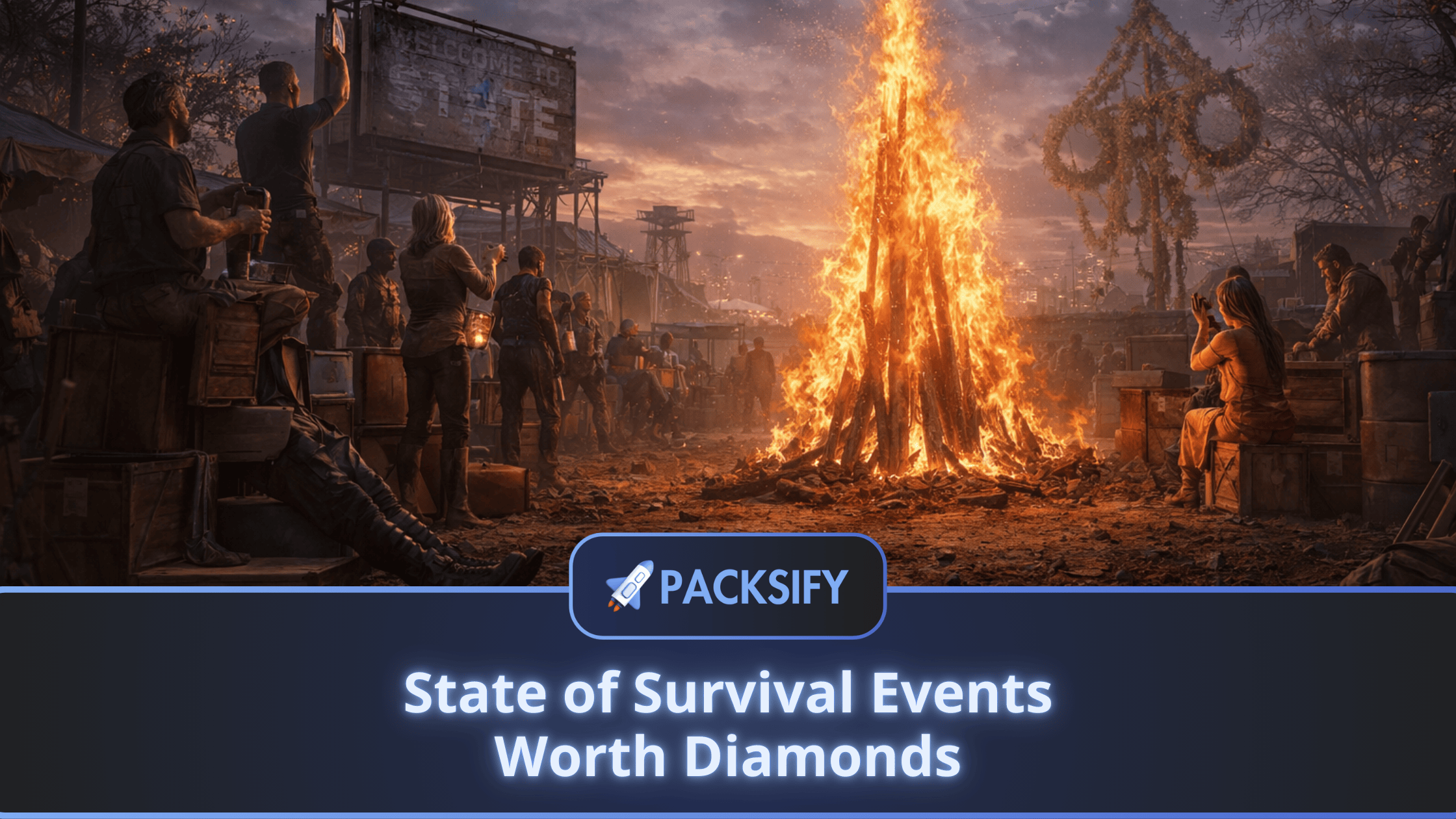
If you run a serious account in State of Survival, events aren’t just entertainment but pressure windows — Survival of the Fittest, Reservoir Raid, Capital Clash, limited-time crossovers — each one compresses timelines and forces decisions about where diamonds should go.
The strongest players on a server aren’t ahead because they click faster or spend blindly. They’re ahead because they deploy diamonds deliberately, only during events that convert spend into lasting power.
The mistake most players make is treating all events as equal, and they’re not. Some exist to drain resources gradually. Others are designed to reward concentrated spend and preparation.
This guide breaks down which State of Survival events are actually worth diamonds, which ones are marginal, and how alliance leaders time spending to maximize outcomes, not just points.
For State of Survival alliance leaders managing ongoing spend, effective event participation requires choosing high-ROI events, aligning upgrades with milestones, and avoiding reactive diamond burn.
Not Every Event Deserves Your Diamonds
State of Survival runs events constantly. Daily, weekly, seasonal — the cadence never stops. That doesn’t mean your diamonds should.
Many events offer small solo rewards or incremental resources. They’re fine for background activity, but they won’t materially move account power, hero depth, or alliance competitiveness.
Alliance leaders should focus diamonds on events that:
- Stack rewards across systems (heroes, HQ, gear)
- Reward concentrated action, not drip spending
- Overlap with other progression tracks
Consistently high-impact events include:
- Survival of the Fittest (SoF)
- Reservoir Raid & Reservoir League
- Capital Clash & State Warfare
- Hero Rank-Up events
- Selective holiday or crossover events
Everything else is optional noise...
How to Prep for the Big Events in State of Survival
If you’re spending or grinding, preparation makes all the difference. You don’t want to burn through your biocaps only to realize the reward milestones were the next day.
Survival of the Fittest (SoF)
Survival of the Fittest remains one of the most efficient weekly events for both spenders and disciplined non-spenders, if you prepare. The core mistake is rushing upgrades the moment the event starts. SoF rewards sequencing, not speed.
Preparation discipline:
- Stockpile speed-ups ahead of research and troop days
- Train troops but delay claiming until scoring windows
- Schedule building upgrades only when milestones reward them
Done correctly, SoF turns routine upgrades into compound rewards.
Reservoir Raid & State Warfare
These are execution-heavy PvP events with real alliance consequences. Rewards scale with preparation, coordination, and hero readiness. If you’re deploying diamonds anywhere, it should be here.
Preparation focus:
- Secure relocators and stamina packs early
- Coordinate alliance matchups and timing
- Finalize hero and gear upgrades before the event window
Spending mid-event is inefficient. Spending prepared is not.
Holiday Events & Limited-Time Crossovers
Not all holiday events are created equal. Some introduce meaningful hero unlocks or unique progression items. Others are cosmetic-heavy with low long-term value. The signal to watch for is milestone structure, not event hype.
Smart prep:
- Identify hero unlocks or exclusive bundles early
- Hold hero search maps until milestones activate
- Avoid early-event spending; wait for thresholds that justify the cost
Make Every Diamond Deployment Intentional
Timing matters more than total spend.
First, spend around milestones, not moments. Random diamond use almost always leaves you short of meaningful rewards. Leaders wait until they can clear the third or fourth milestone tier, where value concentrates.
Second, stack overlapping events. When SoF overlaps with hero development or seasonal events, one action can trigger multiple reward tracks. That’s how experienced leaders double-dip value.
Finally, don’t underestimate speed-ups. Used at the right time, they translate directly into leaderboard movement, milestone unlocks, and sometimes diamond rebates. Time remains the most underpriced resource in the game.
Closing perspective...
Events don’t make accounts stronger. Decisions do.
Alliance leaders who treat events as spending triggers burn diamonds quickly. Those who treat them as deployment windows grow steadily, with fewer regrets and better long-term positioning. The difference isn’t access. It’s discipline.
Where event timing quietly supports alliance execution…
At this level of play, the question is rarely whether leaders are willing to spend during events like Survival of the Fittest or Reservoir Raid. The real variable is whether that spending stays predictable when preparation windows are tight.
When top-ups stall or funding becomes reactive mid-event, officers end up troubleshooting instead of coordinating. Milestones get missed, overlaps are wasted, and prep turns chaotic.
This is where a controlled funding layer matters...
Packsify sits in that layer. Alliance leaders use it so diamonds arrive predictably during major event cycles, allowing R4s and rally leads to focus on preparation and execution — not payment friction.
When funding stays quiet and reliable, event strategy actually works. And at this level, that calm is often the edge.
Same spend, more progression.
Packsify is built for players who outgrow the basics.





.svg)
.svg)

